
Improving the Performance of Technical Systems , Upholding the Productivity of a Company
PMS are professional services that involve the planning, execution, and completion of projects to meet specific goals within set constraints of time, budget, and scope. These services help organizations manage projects efficiently by providing expertise to oversee all project activities, from initial conception to final delivery, ensuring objectives are met, resources are optimized, and risks are mitigated. PMS specialize in the planning, coordination, and execution of projects from initiation to completion, ensuring they are delivered on time, within budget, and within scope. These services provide the expertise, methodologies, and tools necessary to manage complex, temporary endeavors and achieve specific goals or desired outcomes.
Project Management Services (PMS)
Key functions of project management services
Planning and scheduling: Defining project goals, creating a detailed project plan, identifying tasks, and setting clear timelines and milestones.
Resource allocation: Managing and allocating resources such as teams, finances, technology, and raw materials effectively to achieve project objectives.
Execution and monitoring: Overseeing project activities, tracking progress, and monitoring performance against the plan to ensure tasks are completed on schedule.
Risk management: Identifying and mitigating potential risks that could impact the project's success.
Budget management: Developing and managing the project budget to ensure it stays within financial limits.
Communication: Facilitating clear and effective communication between project teams, stakeholders, and clients.
Quality assurance: Ensuring the project's deliverables meet the required quality standards.
Why organizations use project management services
Achieve project success: Services help ensure projects are completed on time, within budget, and to the required specifications.
Improve efficiency: By streamlining processes and optimizing resource allocation, these services can increase overall efficiency.
Mitigate risk: Professional project managers have experience in identifying and managing risks that can threaten a project's success.
Focus on core business: For companies that are not project-focused, professional services allow them to outsource project management to experts, so they can concentrate on their core business activities.
Access specialized expertise: Businesses can access specialized skills and knowledge without the cost of hiring permanent, in-house project managers.
Key Activities and Responsibilities
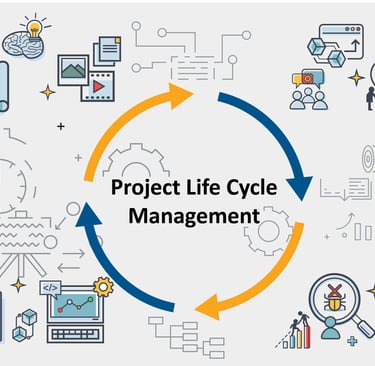
Project management services encompass a wide range of activities performed throughout a project's lifecycle, which typically includes the following five phases:
Initiation: Defining the project's purpose, goals, objectives, and initial scope, and identifying key stakeholders.
Planning: Developing a detailed project plan, which includes defining tasks, estimating time and costs, allocating resources (people, budget, equipment), and creating a schedule with milestones and deadlines.
Execution: Carrying out the planned tasks and activities to produce the project's deliverables. This involves leading the team, managing communication, and coordinating resources.
Monitoring and Controlling: Tracking the project's progress against the plan, managing risks and changes (like scope creep), addressing issues as they arise, and issuing regular reports to stakeholders.
Closure: Formally completing the project, delivering the final product or service to the client, documenting lessons learned, and archiving project documentation.
Benefits of Using Project Management Services
Organizations use professional project management services to:
Improve efficiency and ensure the best use of resources.
Control costs and avoid budget overruns.
Mitigate risks by proactively identifying, analyzing, and developing strategies to manage potential problems before they escalate.
Enhance communication and collaboration among team members and stakeholders.
Increase the likelihood of achieving desired results and strategic objectives.
Access specialized expertise and industry certifications without the costs of hiring full-time staff.
Project management services can be provided by:
In-house project managers employed by the company.
External consultants or firms that offer "Project Management as a Service" (PMaaS), allowing clients to scale resources as needed.
Project Management Offices (PMOs) within an organization, which set standards and governance for managing multiple projects.
These services employ various methodologies, such as Waterfall (traditional, sequential steps), Agile (iterative, often used in software development), Lean, and PRINCE2, depending on the project's needs and the industry.